Called for an Attitude

Summary of my sermon, based on Luke 12:1-12. Preached at Greenhills Christian Fellowship Toronto on July 27, 2025.

Back in 2012, a lot of people were caught up in the “end-of-the-world” predictions tied to the Mayan calendar. Some even thought it might be the day of the rapture. That might sound odd because the Mayan prophecy had nothing to do with Christianity, yet some believers connected the two. Opportunists even profited from that fear. One man, Bart Centre, started a company called Eternal Earth-Bound Pets USA. His pitch was simple: if the rapture took place and Christians disappeared, their pets would need care. For $135 upfront—plus $20 per additional animal—atheist employees promised to collect your pets within 24 hours. To ensure they wouldn’t be “raptured” themselves, those workers were even asked to say something blasphemous against the Holy Spirit.

That detail points us to a serious topic: What does it mean to blaspheme the Holy Spirit? Jesus calls it “the unforgivable sin” in Luke 12:10: “And everyone who speaks a word against the Son of Man will be forgiven, but the one who blasphemes against the Holy Spirit will not be forgiven.” For centuries, Christians have wrestled with this verse. Some—like John Bunyan—feared they had committed it, though he eventually realized he hadn’t. Others, like Puritan John Child, were consumed by guilt and despair.

So what does this actually mean? And could someone commit it accidentally?

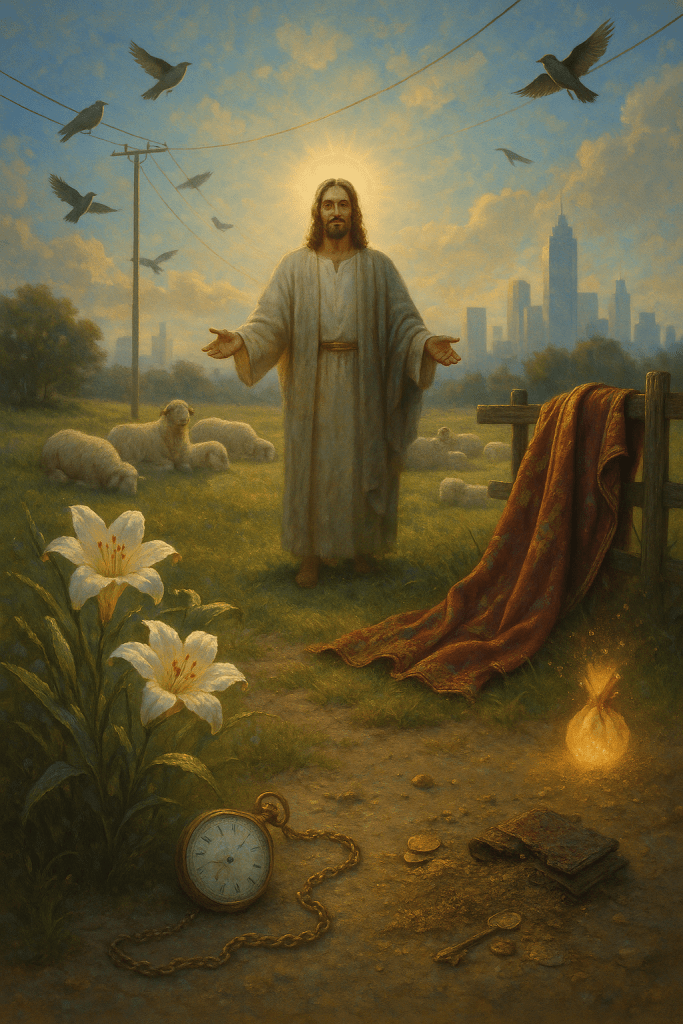
The best place to start is context. Luke 12 begins with Jesus warning about hypocrisy: “Beware of the leaven of the Pharisees, which is hypocrisy” (v.1). Hypocrisy spreads like yeast in bread—it puffs up, but it also creates holes. You might hide those gaps for a time, but Jesus says: “Nothing is covered up that will not be revealed, or hidden that will not be known” (vv.2–3). Judgment Day will expose everything—both sin and good works (1 Timothy 5:24–25). That reality is why Jesus urges His followers to fear God rather than people: “Do not fear those who kill the body, and after that have nothing more that they can do. But I will warn you whom to fear: fear him who, after he has killed, has authority to cast into hell. Yes, I tell you, fear him!” (Luke 12:4–5).

This isn’t a call to panic but to reverence. God’s power is like Niagara Falls—awesome, overwhelming, and not something to treat lightly. Yet Jesus immediately reminds us: “Are not five sparrows sold for two pennies? And not one of them is forgotten before God. Why, even the hairs of your head are all numbered. Fear not; you are of more value than many sparrows” (vv.6–7). The same God who judges sin also cares deeply for those who trust Him, enough to send His Son as our Savior.

From there, Jesus explains that we must not only fear God the Father but also acknowledge God the Son: “Everyone who acknowledges me before men, the Son of Man also will acknowledge before the angels of God, but the one who denies me before men will be denied before the angels of God” (vv.8–9). Denying Christ is hypocrisy in action—professing faith inwardly but refusing to stand for Him outwardly. Without Christ as our advocate (1 John 2:1), we have no defense on Judgment Day.

Then comes the difficult verse: “And everyone who speaks a word against the Son of Man will be forgiven, but the one who blasphemes against the Holy Spirit will not be forgiven” (v.10). Why is insulting Jesus forgivable, but blaspheming the Spirit is not?

Other Gospels help explain. In Matthew 12 and Mark 3, Jesus gives this warning after the Pharisees claim He casts out demons by Satan’s power: “He has an unclean spirit” (Mark 3:30). Calling the Spirit’s work “evil” is an extreme, deliberate rejection. But Luke’s broader context points to a more general truth: resisting the Spirit’s conviction is unforgivable because it leaves a person unwilling to repent. Jesus said in John 16:8, “When he comes, he will convict the world concerning sin and righteousness and judgment.” If someone continually rejects that conviction—attributing God’s work to Satan or dismissing it entirely—they close the door to salvation.

In other words, the “unforgivable sin” is not a careless word; it’s a hardened heart that permanently rejects the Spirit’s call to repent and trust Christ. If you’re worried you’ve committed it, that very concern is evidence you haven’t.

This passage closes with a promise: “And when they bring you before the synagogues and the rulers and the authorities, do not be anxious about how you should defend yourself or what you should say, for the Holy Spirit will teach you in that very hour what you ought to say” (Luke 12:11–12). Those who fear God rather than man will find courage, not despair.

Romans 8:38–39 sums it up: “For I am sure that neither death nor life, nor angels nor rulers, nor things present nor things to come, nor powers, nor height nor depth, nor anything else in all creation, will be able to separate us from the love of God in Christ Jesus our Lord.”

Called Out of Darkness

Summary of my sermon, based on 1 Peter 2:9-11. Preached at Greenhills Christian Fellowship Toronto (Family Camp) on July 20, 2025.

Being chosen by God is not like being the best option in a lineup. It is not like a trainer in a game looking for the strongest fighter. We often think of choice as selecting what is most valuable or most useful. That is how life usually works—we look for the best job, the best school, the best home, and we teach our children to make good choices. But when we read passages like 1 Peter 2:9, we have to be careful. “But you are a chosen race, a royal priesthood, a holy nation, a people for his own possession…” It sounds like we must be special. It sounds like we are chosen because we are better. But then Peter explains why God chooses: “that you may proclaim the excellencies of him who called you out of darkness into his marvelous light.” The choosing is not because of what we are; it is about what he does.

We are called out of darkness, not because we were shining gems hidden in a cave, but because we needed mercy. Verse 10 says, “Once you were not a people, but now you are God’s people; once you had not received mercy, but now you have received mercy.” Mercy means we are not getting what we deserve. And grace—the other side of salvation—means we are receiving what we do not deserve. We needed mercy because before a perfectly holy God, none of us measures up. Even our best efforts fall short. Isaiah 64:6 describes our righteous deeds as polluted garments. Romans 3:23 says, “for all have sinned and fall short of the glory of God,” and Romans 6:23 adds, “the wages of sin is death, but the free gift of God is eternal life in Christ Jesus our Lord.”

God’s choosing is not about our worth. It is about his grace. He sent his Son, Jesus Christ, who met God’s perfect standard and then took the punishment we deserved. Isaiah 53:5 says, “he was pierced for our transgressions; he was crushed for our iniquities; upon him was the chastisement that brought us peace, and with his wounds we are healed.” Romans 5:8 reminds us, “but God shows his love for us in that while we were still sinners, Christ died for us.” That is what it means to be chosen. It means we are loved despite our failures, saved by mercy, and transformed by grace.

If that is true, then being chosen changes how we live. We cannot claim God’s mercy and then live as though nothing has changed. Peter calls believers “sojourners and exiles” because this world is no longer our home. We are passing through, heading toward eternity with Christ. While we are here, we are called to “abstain from the passions of the flesh, which wage war against your soul” (1 Peter 2:11). Sin still surrounds us and tempts us, but sanctification—the ongoing work of God in us—calls us to fight against it. We will not be perfect in this life, but we are expected to grow. Our choices reveal who we belong to—sin, or Christ.

And as we live as sojourners, we are not meant to hide from the world. Verse 12 says, “Keep your conduct among the Gentiles honorable, so that when they speak against you as evildoers, they may see your good deeds and glorify God.” We are called to live visibly, to show mercy because we have received mercy, to demonstrate grace because grace was given to us. We are not chosen to boast about ourselves. We are chosen to proclaim his excellencies, to be witnesses in a world that still needs the same mercy we were given.

Serve One Another

Summary of my sermon, based on Galatians 5:13-15. Preached at Greenhills Christian Fellowship Toronto on July 6, 2025.

When you hear the word “freedom,” what comes to mind? For many people, it’s economic freedom—having enough money to do whatever you want. Whether it’s traveling, taking up hobbies, or just relaxing on a beach, freedom often looks like having no obligations. And while that kind of freedom sounds appealing, it’s often just a dream. In reality, we carve out little moments of freedom—like weekends or holidays—tiny escapes from the things we must do. But this leads to a misunderstanding: that freedom is simply the opposite of obligation. That’s why Galatians 5:13 is so important. Paul writes, “You were called to freedom.” And that very first line pushes against our assumptions. Freedom, according to the Bible, is not something we naturally have. Nor is it something we fight for. It’s something we’re called to—by God.

This brings us to our One Another series. If you’ve been with us since January, you’ll remember that we’ve been working through the “one another” commands of the New Testament—23 in total, though some are repeated. We began with “love one another,” which is repeated more than any other. It’s foundational, the “one command to rule them all.” And it directly connects to today’s command in Galatians 5:13: “through love, serve one another.” Paul goes on in verse 14 to say, “For the whole law is fulfilled in one word: ‘You shall love your neighbor as yourself.’” But that’s not the only “one another” command in this passage. In verse 15, Paul gives a warning: “But if you bite and devour one another, watch out that you are not consumed by one another.”

So what does it mean to be called to freedom? First, it means that freedom doesn’t equal doing whatever we want. Even our most celebrated freedoms—like freedom of speech—have limits. Just try yelling “bomb” on a plane and see how far that freedom goes. Freedom always comes with boundaries. And in Scripture, being “called” to freedom emphasizes that it comes from God. Galatians 1:15–16 tells us that God, by his grace, set Paul apart and called him. In 1 Corinthians 1:24, the message of Christ crucified is foolish to the world, but to those who are called, it is the power and wisdom of God. True freedom is a gift we receive when we are called by God and come to know Christ.

This is why Jesus says in John 8:36, “So if the Son sets you free, you will be free indeed.” And Romans 8:1–2 says that we are free from the law of sin and death. But that doesn’t mean we’re free to sin. In fact, Romans 6:16 warns that if we present ourselves to sin, we become slaves to it. Freedom in Christ isn’t the freedom to do whatever we want—it’s the freedom to obey God. It’s the freedom to live in love and righteousness. That’s why Paul says, “Don’t use your freedom as an opportunity for the flesh.”

Now here’s the warning. Even though we are free from the penalty and power of sin, we still live in a world where the presence of sin is real. That’s why Paul warns us not to bite and devour one another. Because when we do, we’re not acting in freedom—we’re acting like the enemy. 1 Peter 5:8 describes the devil as a roaring lion seeking someone to devour. And when we gossip, manipulate, and turn on each other, we’re reflecting his work—not God’s. That’s why Paul tells us again: use your freedom to serve one another in love.

Being Mothers of the Word

Summary of my sermon, based on Deuteronomy 6:6-7. Preached at Greenhills Christian Fellowship Toronto on May 11, 2025 (Mother’s Day).

Last week, Elder John Greg preached on God’s call to Moses from the burning bush and described it as Moses’s origin story. But today, I want to rewind even further and look at the very beginning of that story—Moses’s birth and childhood. I want us to see how someone like Moses grew up to become a man of such faith that he would rather be mistreated with the people of God than enjoy the fleeting pleasures of sin. That’s what Hebrews 11:24–25 tells us: “By faith Moses, when he was grown up, refused to be called the son of Pharaoh’s daughter, choosing rather to be mistreated with the people of God.” But where did that faith come from? How did Moses even know he wasn’t Egyptian? How did he know enough about the God of Israel to make such a costly choice?

To answer that, we go back to Exodus 1. Pharaoh had commanded that every Hebrew baby boy be killed, but the Hebrew midwives, Shiprah and Puah, feared God and refused. Then in Exodus 2, Moses is born. His mother hides him for three months, and when she can no longer hide him, she places him in a basket and sends him down the Nile—technically obeying Pharaoh’s command to cast him into the river. His sister follows the basket, watching over it until Pharaoh’s daughter finds it. And when the princess opens the basket, she knows immediately that this is one of the Hebrew babies. That’s when Miriam, Moses’s sister, bravely steps forward and suggests finding a Hebrew woman to nurse the child—and of course, she goes and gets their mother, Jochebed.

That’s where everything changes. Pharaoh’s daughter not only agrees but offers to pay Jochebed to raise her own son. God’s providence is so evident here. And although Jochebed is not named in Exodus 2, we find her name later in Exodus 6:20. It’s Jochebed who gets to nurse Moses, to raise him in his earliest years, and to teach him who he really is. Before he ever returns to Pharaoh’s household and receives an Egyptian education, Moses learns that he is a child of Abraham, Isaac, and Jacob. He learns to trust in the God of Israel. And those early lessons are what shaped his identity and formed the faith we see described in Hebrews 11.

Even though Moses eventually returns to the palace, he never forgets who he is. Exodus 2:11 says, “One day, when Moses had grown up, he went out to his people and looked on their burdens.” Did you catch that? His people. Jochebed planted that in his heart. That’s why, later in life, he chose to suffer with his people rather than enjoy the palace’s comforts. That’s also why Hebrews 11:23 says, “By faith Moses, when he was born, was hidden for three months by his parents… they were not afraid of the king’s edict.” She’s not named here either, but we know who that was. That was Jochebed. She’s part of the Hall of Faith.

And today, on Mother’s Day, we tell this story not just to honour biological mothers like Jochebed but also the many women who act as motherly figures in the lives of others. Women like the midwives Shiprah and Puah, who feared God. Women like Miriam, who watched over her baby brother and spoke up boldly. Even Pharaoh’s daughter, who took a Hebrew baby as her own, defying her father’s deadly command. God used each of them to raise up the man who would lead Israel out of slavery.

And so we turn to our passage this morning from Deuteronomy 6:6–7: “And these words that I command you today shall be on your heart. You shall teach them diligently to your children…” These verses were given to all of Israel, not just to mothers. But Proverbs 6:20 reminds us, “My son, keep your father’s commandment, and forsake not your mother’s teaching.” Mothers and spiritual mothers alike have a high calling. We are to store God’s word in our hearts like Psalm 119:11 says, teach it diligently like Deuteronomy commands, and display it prominently in our lives and homes. Because the faith that leads someone like Moses to make the hard choice begins in the home.

Responding to God’s Presence and Revelation

Summary of my sermon, based on Luke 11:24-36. Preached at Greenhills Christian Fellowship Toronto on Resurrection Sunday – April 20, 2025.

Despite all the miracles Jesus performed—like casting out demons—there were still some who accused him of working with Satan, or Beelzebul. Others weren’t satisfied and kept asking for more signs to prove he was the Messiah. These responses mirror what we see in our world today. Some people see Jesus as just one of many spiritual options. Others want to believe—but only on their own terms, when their personal standards of “proof” are met. But Jesus addresses both responses with clarity and boldness, especially when he talks about the “sign of Jonah.”

Jesus makes it clear that this generation’s demand for signs is evil. They weren’t seeking the truth—they were shifting the goalposts, never satisfied. So he gives them one sign and one sign only: the sign of Jonah. Just as Jonah spent three days in the belly of a great fish before being spit back out, Jesus would be buried for three days before rising again. This, he says, is the ultimate sign that he is who he claims to be.

And of course, we know what happened. Jesus was crucified, buried, and on the third day, he rose again. That’s the heart of the Gospel we celebrate on Resurrection Sunday. That’s the sign he gave—a supernatural event that no amount of skeptical reasoning can erase. And yet, the world still tries. From the earliest days, people have come up with alternative theories: maybe Jesus’ body was stolen, maybe it was a mass hallucination, maybe he never really died. But none of those explanations hold up. Roman soldiers knew how to execute. Hallucinations don’t appear to 500 people at once. And no one dies for something they know is a lie—yet that’s what happened to many of Jesus’ followers.

So what’s really going on with these objections? It’s not about evidence. It’s about the heart. People reject the resurrection not because it’s unbelievable, but because they don’t want to believe. And that’s why Jesus brings up the Queen of Sheba and the people of Nineveh. They responded to far less than what Jesus offered. The Queen of Sheba traveled great distances just to hear Solomon’s wisdom—and ended up praising Yahweh. The Ninevites repented at Jonah’s preaching, even though Jonah was reluctant and flawed. And yet Jesus, who is greater than Solomon and Jonah, stood before them—and they refused him.

So Jesus draws the line. He is the light, and his message is like a lamp. It’s not meant to be hidden—it’s meant to shine, to give light to all who will receive it. And those who open their eyes to that light will be full of it—full of truth, full of life. But those who keep their eyes shut, who refuse to believe unless every demand is met, will remain in darkness.

This is where Jesus lands the point. Be careful that the light in you isn’t actually darkness. The resurrection isn’t just a nice idea or a hopeful story—it’s the sign. The one sign we’re given. And the proper response isn’t more demands, more debate, more delay. The proper response is faith. Receive the message. Accept the light. And let it fill you.