

Summary of my sermon, based on Micah 2. Preached at Greenhills Christian Fellowship Toronto on October 26, 2025.
It’s unexpected that I’m in my heavy winter sweater this morning. The weather gives us a kind of justification for the sermon series we’re in now. As you know from last week, I started our Christmas series, God With Us: Advent in the Book of Micah. I want us to spend a good amount of time in this book so we can draw out the wonderful things we can learn about God.
Last week in chapter one, the prophet Micah gave an initial prophecy I called the Holy One drawing near—judgment against Israel and Judah. The imagery was earthquakes and volcanoes: the God of the universe coming down to judge his creation and, in particular, his people. Yet hundreds of years after Micah, God drew near again—this time not with earthquakes and volcanoes, but with a silent night: the Word became flesh in Jesus Christ.
It is fitting to talk about God’s judgment, because only a truly good God judges evildoers. If people can do evil without consequences, we lose any concept of right and wrong—might would make right, and only the strongest would flourish. Praise the Lord that he judges evil. The problem people have with God’s wrath is that it turns toward us. Everyone loves justice until that justice is against you. “For all have sinned and fall short of the glory of God” (Romans 3:23). “For the wages of sin is death, but the free gift of God is eternal life in Christ Jesus our Lord.” (Romans 6:23) Without judgment and wrath, there is no need for the gospel. But God does judge evil—therefore we do need a Savior.
The broad prophetic complaint is idolatry. “Who is like you, O LORD, among the gods? Who is like you, majestic in holiness, awesome in glorious deeds, doing wonders?” (Exodus 15:11) Yet “although they knew God, they did not honor him as God or give thanks to him, but they became futile in their thinking, and their foolish hearts were darkened.” (Romans 1:21) This is the basic sin of humanity from which other sins flow.
In Micah 2, a specific sin surfaces:
“Woe to those who devise wickedness and work evil on their beds!
When the morning dawns, they perform it, because it is in the power of their hand.
They covet fields and seize them, and houses, and take them away;
they oppress a man and his house, a man and his inheritance.” (Micah 2:1–2)
Elites plot to seize the land of their fellow Israelites—likely the poorest and most oppressed. This brings us to social justice in Micah. “He has told you, O man, what is good; and what does the LORD require of you but to do justice, and to love kindness, and to walk humbly with your God?” (Micah 6:8) That is absolutely an issue: the rich oppressing the poor, the needy neglected. But I want to be cautious not to conflate contemporary social justice with biblical social justice.
Here is the emphasis: contemporary social justice is entirely man-centered—all about human structures and human solutions. Biblical social justice has both social and theological aspects: social and theological wrongs, with social and theological resolutions. The social aspect is obvious: the rich steal land; people have their inheritance taken. The theological aspect appears in Micah’s wording: they covet. He doesn’t merely say they want fields; he calls it coveting—the Tenth Commandment: “You shall not covet your neighbor’s house… or anything that is your neighbor’s.” (Exodus 20:17) Micah intentionally ties this to the Ten Commandments as a whole.
Think of the commandments as vertical (first four: our duty to God) and horizontal (last six: our duty to one another). Keep the vertical, and the horizontal follows. Jesus said: “You shall love the Lord your God with all your heart and with all your soul and with all your mind. This is the great and first commandment. And a second is like it: You shall love your neighbor as yourself. On these two commandments depend all the Law and the Prophets.” (Matthew 22:37–40) To break the horizontal is to break the vertical. So David confesses, “Against you, you only, have I sinned and done what is evil in your sight.” (Psalm 51:4)
There is more. Land in Israel is not merely property; it is inheritance—a covenant sign of God’s relationship with his people. God’s promise to Abram: “To your offspring I will give this land.” (Genesis 12:7) This is codified in Israel’s law through the Jubilee: “In this year of jubilee each of you shall return to his property. And if you make a sale to your neighbor or buy from your neighbor, you shall not wrong one another.” (Leviticus 25:13–14) And the foundation: “The land shall not be sold in perpetuity, for the land is mine. For you are strangers and sojourners with me.” (Leviticus 25:23) To steal land is to tamper with a covenant sign; it is not only theft, it is rebellion against God.
Therefore the judgment:
“Behold, against this family I am devising disaster, from which you cannot remove your necks…
‘We are utterly ruined; he changes the portion of my people; how he removes it from me!
To an apostate he allots our fields.’
Therefore you will have none to cast the line by lot in the assembly of the LORD.” (Micah 2:3–5)
The yoke image is control you cannot throw off—foreign power, exile. Judgment extends to all Judah because the specific sin sits inside widespread idolatry. Yet notice the last line: the land-grabbers will have no advocate in the assembly of the LORD. That hints at hope: if there is an assembly to come, there will be a people to assemble.
But the rot deepens: false prophets say, “Do not preach”—they bless what God condemns. “Woe to those who call evil good and good evil.” (Isaiah 5:20) Here is a present example: the health, wealth, and prosperity gospel. As John MacArthur says, “Where does the prosperity gospel come from? Answer: Satan… This is satanic… the fulfillment of all your dreams and all your desires… the lust of the flesh, the lust of the eyes, and the pride of life… turning temptations into somehow honorable desires.” It works because it plays into unregenerate desires—turning evil “good.” Some of the largest churches preach it. As culture in places like America grows more secular, prosperity preachers turn to the developing world—the Philippines, Africa—preying on the poor. (See, for example, Mike Winger’s long-form work calling out Benny Hinn.) In effect, they steal from the poor while distorting the gospel, making it harder for true believers to preach the true gospel.
God does not promise health, wealth, and ease; he promises his presence in suffering and ultimate restoration. “After you have suffered a little while, the God of all grace… will himself restore, confirm, strengthen, and establish you.” (1 Peter 5:10) The true gospel is that Christ died to reconcile us to God, not to deliver our wishlist. “For Christ also suffered once for sins, the righteous for the unrighteous, that he might bring us to God.” (1 Peter 3:18)
And Micah does not end in despair:
“I will surely assemble all of you, O Jacob; I will gather the remnant of Israel;
I will set them together like sheep in a fold, like a flock in its pasture…
He who opens the breach goes up before them… their king passes on before them, the LORD at their head.” (Micah 2:12–13)
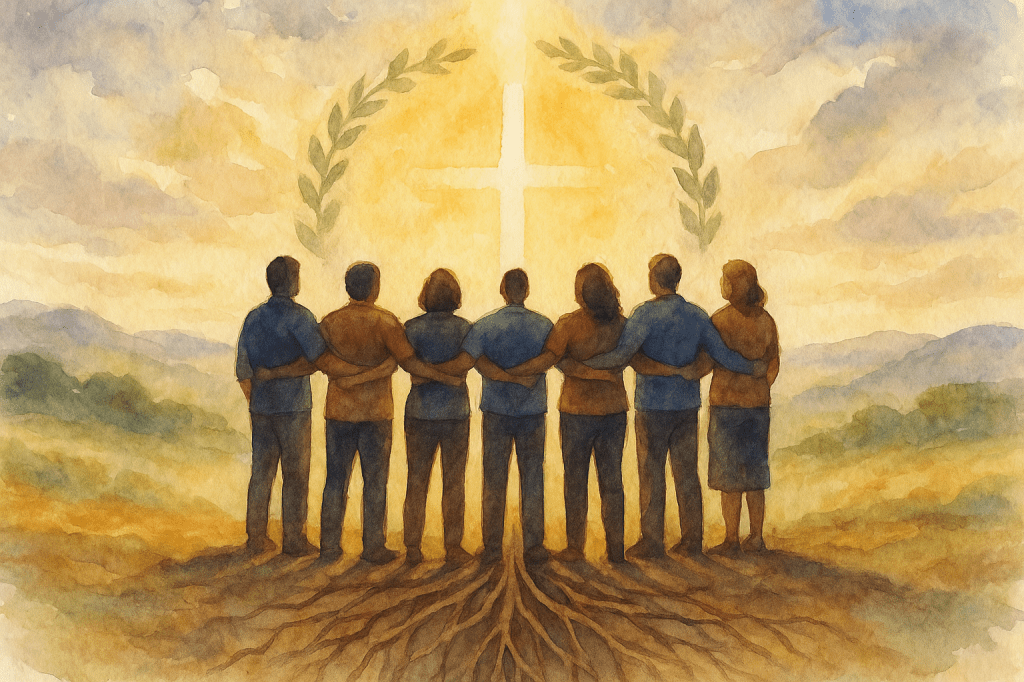
A remnant will be gathered under a Shepherd–King. Jesus comes as the good shepherd who gathers, guides, and lays down his life for the sheep. Biblical social justice does not terminate on systems; it leads to the cross—to God giving his Son for us. It does not end with man-centered fixes (it doesn’t end with, say, pronouns in your LinkedIn profile); it ends with atonement and a new people who do justice, love kindness, and walk humbly with their God.
We praise the Lord for the cross. We thank him that he has not given us merely temporal solutions to the problems of a fallen, broken world, but the once-for-all sacrifice of Christ, the promise that we will be made alive with him for eternity.





 Excel Still More