Bear with One Another

Summary of my sermon, based on Colossians 3:12-15. Preached at Greenhills Christian Fellowship Toronto on December 7, 2025.

Resilience is an interesting attribute in dire situations. It’s something celebrated across cultures, and it’s the kind of thing people make movies about. Take the story of Louis Zamperini. His life was told in the book—and later the film—Unbroken. Zamperini was a bit of a delinquent as a youth, but he got into long-distance running and competed in the 1936 Berlin Olympics. Then World War II began. In 1941 he joined the U.S. Army Air Corps and became a bombardier in the Pacific, flying missions against Japanese-held islands. During a search-and-rescue mission his plane had mechanical failure and crashed. He and two others survived on a small life raft, fighting off sharks and nearly capsizing in a typhoon. On the 47th day they reached land—the Marshall Islands—only to be captured by the Japanese. They were tortured, malnourished, and beaten as prisoners of war for years until the war ended. Even after release, Zamperini struggled with what we now call PTSD, but eventually he attended a Billy Graham crusade and gave his life to Christ. That began a different kind of journey—a different kind of resilience.

His story is awe-inspiring, but it turns out most people actually have a high “baseline resilience.” Studies show that the majority who suffer trauma don’t end up with severe, chronic psychiatric issues; many do bounce back with family, community, and professional support, and some even find growth and meaning through what they endured. I’m not minimizing trauma—those who carry lingering effects like PTSD need care, not stigma—but for the vast majority, our God-given capacity to recover is real.

Interestingly, the opposite often shows up with things that aren’t catastrophic. For example, 80–95% of people who lose weight regain it within two years. When it comes to endurance in everyday disciplines—dieting, sustained lifestyle change—we’re not so resilient. Another area is relationships. “Cutting out toxicity” is the buzzword now—cutting off toxic bosses, coworkers, friends, even family. I read pieces after the 2024 U.S. election asking whether to invite relatives who voted for the other party to Thanksgiving. Now, there’s a difference between toxicity and abuse; abuse should never be tolerated. But on a lot of plain differences and offenses, our age seems increasingly unwilling to endure.

That is the opposite of what our passage teaches. We’re in our series on the “one another” commands; this is our eighth, since we’ve been doing one on the first Sunday each month. Today’s command is “bear with one another” (Colossians 3:12–15). Paul tells us, as God’s chosen, holy, and beloved, to put on compassionate hearts, kindness, humility, meekness, and patience, bearing with one another; and if anyone has a complaint against another, forgiving each other as the Lord has forgiven us (Colossians 3:12–15). We tend to hear “bear with one another” and think, “Just put up with little annoyances for the sake of peace.” But Paul ties it to real forgiveness when real hurt has happened. This is more than personality quirks. It’s learning to endure and forgive when we’ve actually been wronged.

In Romans, Paul frames it this way: “We who are strong have an obligation to bear with the failings of the weak, and not to please ourselves,” seeking our neighbor’s good to build them up (Romans 15:1–2). That implies closeness. If we truly function as a family, conflict will happen. You actually have to care to get hurt. I’d be more concerned if a church never had conflict—it might mean we’ve stopped engaging from the heart. So we must bear with the failings of others.

There are limits, though, because the aim is to build up (Romans 15:2). Some things shouldn’t be “endured.” Abuse must never be endured. And habitual, unrepentant sin must not be ignored; it destroys witness and may reveal salvation issues. Hebrews warns that if we go on sinning deliberately after receiving the knowledge of the truth, we face judgment (Hebrews 10:26–27). That’s why Jesus and the apostles give the church a process for discipline: not to shame, but to rescue. If we “bear with” ongoing, unrepentant sin, we may miss the chance to call someone to the gospel.

A recent example of courage here is what happened in the Southern Baptist Convention removing Saddleback Church from fellowship over theology—specifically complementarian convictions about the pastoral office. Saddleback started with solid theology, but over time some positions were revised using a hermeneutic that treats certain biblical commands as merely first-century cultural. Where does that end? If Scripture is culture-bound wherever we feel tension, what guards us from drifting on issues like the sanctity of life? The SBC chose to uphold what they are convinced Scripture teaches, even though Saddleback is a very large church. The point isn’t to relitigate that vote here, but to say: bearing with one another doesn’t mean papering over serious doctrinal or moral departures. Love sometimes looks like hard, humble clarity.

So how do we rightly bear with one another when real hurt (but not abuse or entrenched sin) is involved? Paul already gave us the clothing to put on: compassion, kindness, humility, meekness, patience (Colossians 3:12). Compassion and kindness mean more than gritting our teeth; they move toward the other’s good. Humility and meekness remember that today I’m bearing with your failings; tomorrow you may be bearing with mine. Patience is the bedrock of Christlike endurance.

“Above all,” Paul says, “put on love, which binds everything together in perfect harmony,” and “let the peace of Christ rule in your hearts,” since we were called to peace in one body—and be thankful (Colossians 3:14–15). That throws us back to the first sermon in this series: “love one another.” Love is the only way the one-another commands actually happen. The problem is that love is hard, especially if we’ve absorbed a transactional view: I love you because you benefit me. When the benefit dries up, so does the love. But Jesus says the greatest love lays down its life for friends (John 15:13). Biblical love is sacrificial and others-focused. Paul’s famous description of love—patient, kind, not envious or boastful, not rude or self-seeking, not irritable or resentful; rejoicing with the truth; bearing, believing, hoping, and enduring all things—confronted a divided church (1 Corinthians 13:4–7). That’s the kind of love that makes real bearing possible.

We can’t manufacture that love. We love because he first loved us (1 John 4:19–21). So we have to keep cultivating our hearts in the love of God—stirring our affections for Christ in the ways that most help us: worship, prayer, meditation, study of the Word. As we come to Advent, pick up the devotional if you haven’t. Let it help you set your heart on Christ’s first coming and long for his second. And let the peace of Christ rule in your heart (Colossians 3:15). He is the Prince of Peace, and by his death, burial, and resurrection he has made peace for us with God. Without Christ’s peace within, this kind of love will feel impossible. If you don’t know him, I invite you to come to him—let his peace rule in your heart today. And if you do know him, be thankful. This is what we remember at the Lord’s Supper: Advent’s hope, the cross’s grace, and the promise of his return. Only through the gospel can we truly love God and one another, and only with that love can we bear with one another in a way that honors Christ.

Greet One Another With a Holy Kiss

Summary of my sermon, based on 2 Corinthians 13:12. Preached at Greenhills Christian Fellowship Toronto on November 3, 2025.

How do you view greeting? For many of us, it’s probably not something we think about very much. Among my friends and colleagues—even my manager—it’s not really something we think about. Usually for me, it’s just a simple “what’s up,” because I grew up in Scarborough in the late 90s. That was our thing back then. For the most part here in the West, it’s not something we think of very often.

That’s not the case in other countries. Recently I came across a reel about greetings in Japan where, depending on your status relative to the person you’re greeting, there are various appropriate ways to greet. If you happen to see the president of your company in the morning, the appropriate greeting would be “Ohayougozimashita”—the longest, most polite form of “good morning.” For a manager it might be “Ohayougozaimasu,” for a senpai it’s simply “Ohayou,” and for a friend or colleague it can be as short as “Sus.” In general, the longer the greeting, the more polite and formal; the shorter, the more casual. Japan is much more rigidly structured in that way than the West.

Something else I found on the interwebs: people crashing out on LinkedIn over how you greet someone on the phone. One recruiter from North Carolina posted (in all caps): “I returned the candidate’s call. His first words shocked me.” The candidate had left a very professional message, a high-level profile, but when the recruiter called back (from the same number), he answered, “Hello.” Apparently that mattered a lot. The recruiter couldn’t understand why professionals answer without saying who they are. As you can imagine, the post was met with ridicule. My favorite reply: “It’s obviously unacceptable to answer just ‘hello.’ You have to say, ‘Hello, is it me you’re looking for?’” (Yes, that’s Lionel Richie.)

In all seriousness, while LinkedIn recruiters may be a little overzealous, greetings do matter. They matter enough that the Apostle Paul commanded Christians how to greet one another. This is one of the “one another” commands we’re covering: “Greet one another with a holy kiss.” (2 Corinthians 13:12, ESV) Paul repeats it in Romans 16:16; 1 Corinthians 16:20; 1 Thessalonians 5:26. Peter echoes it with a slight variation: “Greet one another with the kiss of love.” (1 Peter 5:14, ESV)

Depending on your cultural background, that may sound strange. But in Toronto, this might not be so foreign. Think of the Kennedy Kiss & Ride—a staple in Scarborough culture. It captures the idea: not an erotic kiss, but a simple greeting (often a cheek-kiss). In North America, that’s not predominant anymore; in parts of Europe, Latin America, and the Middle East, it still is. In the Philippines there’s the “besso-besso”. But, even within one culture, families vary. On my mom’s side, we greet elders with a kiss on the cheek (I don’t “mano” my Lola; I kiss her as a greeting). On my dad’s side, it’s different. Not better or worse—just different.

The key point: kissing has been, and continues to be, a common greeting in many parts of the world, especially among family and close friends. A biblical example appears in Acts 20 when Paul says farewell to the Ephesian elders: “And when he had said these things, he knelt down and prayed with them all. And there was much weeping on the part of all; they embraced Paul and kissed him, being sorrowful most of all because of the word he had spoken, that they would not see his face again.” (Acts 20:36–38, ESV)

That brings us to the adjective holy. What does a holy kiss mean? One way to understand it is by its opposite: unholy kisses.

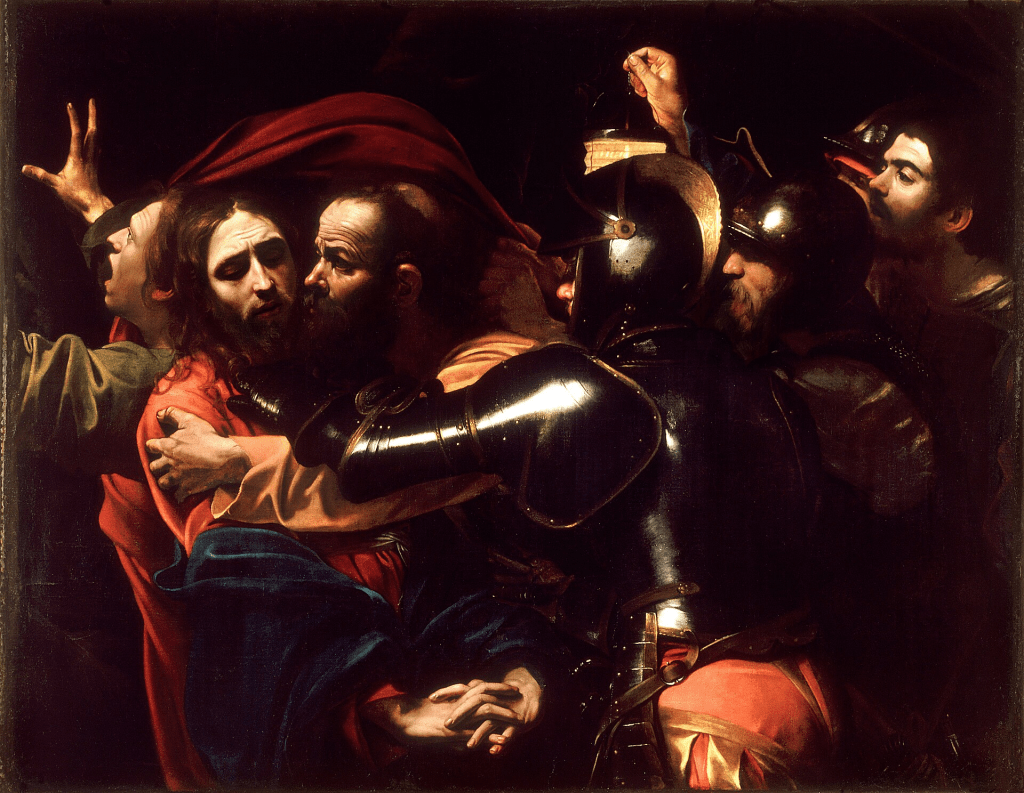
The most infamous unholy kiss is Judas’s betrayal: “Now the betrayer had given them a sign, saying, ‘The one I will kiss is the man. Seize him and lead him away under guard.’ And when he came, he went up to him at once and said, ‘Rabbi!’ And he kissed him. And they laid hands on him and seized him.” (Mark 14:44–46, ESV)

Another unholy kiss is a kiss of deception in 2 Samuel 20. After David replaced Joab with Amasa, Joab met Amasa on the road: “And Joab said to Amasa, ‘Is it well with you, my brother?’ And Joab took Amasa by the beard with his right hand to kiss him. But Amasa did not observe the sword that was in Joab’s hand. So Joab struck him… and he died.” (2 Samuel 20:9–10, ESV)

In the church, we may not often face outright betrayal, but we can be tempted to deceive—to greet warmly while harboring jealousy, anger, or bitterness. Paul instructs us otherwise: “Let all bitterness and wrath and anger and clamor and slander be put away from you, along with all malice. Be kind to one another, tenderhearted, forgiving one another, as God in Christ forgave you.” (Ephesians 4:31–32, ESV)

That is the content of a holy greeting: kindness, tenderheartedness, forgiveness. A beautiful picture of a holy kiss appears in Jesus’ parable of the prodigal son: “But while he was still a long way off, his father saw him and felt compassion, and ran and embraced him and kissed him.” (Luke 15:20, ESV)

It is a kiss of forgiveness and grace, overshadowing great wrong. I think Paul had this kind of grace in mind when he urged the Corinthians to greet one another with a holy kiss—especially given his painful history with them. He had confronted sexual immorality, greed, idolatry, slander, adultery, and divisions. He wrote a hard letter and made a painful visit. Then he explained:

“For I made up my mind not to make another painful visit to you. For if I cause you pain, who is there to make me glad but the one whom I have pained?… For I wrote to you out of much affliction and anguish of heart and with many tears… to let you know the abundant love that I have for you.” (2 Corinthians 2:1–4, ESV)

So when Paul says “greet one another with a holy kiss,” he means: you are family now. Show closeness and affection in a way that fits the gospel you believe and the salvation you’ve received in Christ.

In closing, I’m not saying we need to start kissing each other as part of our greetings. We’re in Canada; that’s not our common form. But we should practice whatever is culturally appropriate to show we are not mere acquaintances—we are the family of God, brothers and sisters in Christ. Our greetings should be affectionate and reflect our relationship to each other. They should not be unholy or deceitful, hiding things that need to be addressed. They should be genuine and true, holy, and filled with the self-sacrificing grace and love Christ showed us when he died on the cross—a gospel we remember especially when we celebrate the Lord’s Supper.

Called to True Repentance

Summary of my sermon, based on Luke 12:35–48. Preached at Greenhills Christian Fellowship Toronto on September 14, 2025.

This morning we looked at Luke 12:35–40, where Jesus tells His disciples, “Stay dressed for action and keep your lamps burning, and be like men who are waiting for their master to come home from the wedding feast, so that they may open the door to him at once when he comes and knocks.” His message is simple: always be ready. We don’t know the day or the hour of His return, so every moment of our lives ought to be lived in readiness.

The preacher reminded us that this is not a new call for God’s people. Many Christians in the last century looked at world events and believed the Lord’s return was near. On November 29, 1947, the United Nations voted to establish a Jewish homeland after nearly 1,800 years of exile. For Bible-believing Christians, this looked like a direct fulfillment of prophecy, like Amos 9:14–15 where God promised to plant His people back in their land never to be uprooted again. If Israel was back in their homeland, many believed the rapture was just around the corner. Nearly eighty years have passed, and while some things have come to pass, others like the rebuilding of the temple have not. But Scripture reminds us in 2 Peter 3:8–9 that God’s timing is not like ours: “With the Lord one day is as a thousand years, and a thousand years as one day. The Lord is not slow to fulfill his promise as some count slowness, but is patient toward you, not wishing that any should perish, but that all should reach repentance.” What seems slow to us is actually God’s mercy, giving time for more to come to repentance.

Of course, Christians have understood prophecy in different ways. Some see the millennium as a literal thousand years still to come, others see it as symbolic of the present church age, and still others see it as the spread of the gospel before Christ returns. But whatever our viewpoint, one truth remains the same: Jesus is coming again. We may debate the details, but we cannot ignore the command to be ready.

Jesus uses two pictures to describe readiness. He says, “Stay dressed for action,” or as the old translations put it, “gird up your loins.” In those days, men wore long robes that would get in the way of work or travel, so they would tuck them up into their belts so they could move freely. To stay dressed for action means to live ready, unentangled, unhindered, able to obey quickly. Then He says, “Keep your lamps burning.” In other words, don’t let your faith burn low. Don’t grow drowsy in your walk with God. Be alert, be awake, because He could come at any moment.

And then Jesus gives a surprising promise. He says that when the master returns and finds his servants awake, “Truly, I say to you, he will dress himself for service and have them recline at table, and he will come and serve them.” That is astonishing. The servants are the ones who ought to serve, but here the Master serves them. What a picture of the blessing Christ will give to those who remain faithful and ready.

But there is also a sobering side. Jesus says His coming will be like a thief in the night. You don’t get a calendar notice for when a thief will show up; he comes suddenly. That’s how Christ’s return will be—unexpected, swift, like lightning flashing across the sky.

Peter wanted to know if this warning was just for the apostles, but Jesus’ answer shows it is for everyone. Every servant will give an account. The servant who knows his master’s will and ignores it will be judged severely. The one who is careless with what he has been given will also be held responsible. And then Jesus lays down the principle: “Everyone to whom much was given, of him much will be required.” Week after week we hear the Word of God. That is a gift, but it also carries responsibility. We cannot treat His Word lightly.

The call is clear. Live watchfully. Keep your faith burning. Be faithful in what God has given you. Christ could come at any moment, or our life could end at any moment. Either way, the question remains: will He find us ready?

Maranatha. Come, Lord Jesus.

Called to be Free from Anxiety

Summary of my sermon, based on Luke 12:22-34. Preached at Greenhills Christian Fellowship Toronto on August 24, 2025.

“Therefore I tell you, do not be anxious about your life, what you will eat, nor about your body, what you will put on. For life is more than food, and the body more than clothing” (Luke 12:22–23, ESV). This passage represent a movement from last week’s exhortation, “be on your guard against all covetousness, for one’s life does not consist in the abundance of his possessions” (Luke 12:15) to today’s call: do not be anxious. Jesus turns from those who have to those who have not. Whether it is abundance or need, the message is the same: there’s more to life than things. To the rich: don’t hoard, be generous. To the needy: do not be anxious.

Jesus gives three illustrations. First, “Consider the ravens: they neither sow nor reap, they have neither storehouse nor barn, and yet God feeds them. Of how much more value are you than the birds!” Ravens in Israel were like our city pigeons—plentiful and least appreciated—yet God cares for them. Then Jesus asks, “Which of you by being anxious can add a single hour to his span of life?” Worry drains your energy and changes nothing. It’s the stress we feel when we can’t control what’s happening.” We cannot do “as small a thing” as add an hour to our lives, but God can. He added not just an hour but fifteen years to Hezekiah’s life: “I have heard your prayer… behold, I will add fifteen years to your life.” Anxiety is the opposite of trusting God.

Second, “Consider the lilies, how they grow: they neither toil nor spin, yet I tell you, even Solomon in all his glory was not arrayed like one of these.” Grass and flowers are temporary: “The grass withers, the flower fades, but the word of our God will stand forever.” If God so clothes what is here today and tomorrow is thrown into the oven, how much more will he clothe you, “O you of little faith”? Again, the call is to trust him.

Third, Jesus redirects priorities: “Do not seek what you are to eat and what you are to drink, nor be worried… Instead, seek his kingdom, and these things will be added to you.” This echoes the more familiar wording in Matthew 6: “But seek first the kingdom of God and his righteousness, and all these things will be added to you.” This does not mean every Christian should quit work and rely on almsgiving. Some are called to raise support—missionaries, like those who cannot work except in “tent making” situations—but most are not expected to stop earning. Your job may be God’s way of providing for you, your family, the church, and missionaries. The point is priority: seek first the kingdom.

So when Jesus says, “Fear not, little flock, for it is your Father’s good pleasure to give you the kingdom. Sell your possessions, and give to the needy… Provide yourselves with moneybags that do not grow old… For where your treasure is, there will your heart be also,” he is giving the highest standard—a superlative—to make the point. The standard is to put your complete trust in God by making his kingdom the absolute priority. Our priorities are revealed by where our money goes and what we worry about. A “golden child” story illustrates this: where the value is, the resources and thoughts go. Follow your spending and your worries, and you will find your treasure.

When we do not trust God, we lean on ourselves. “Trust in the LORD with all your heart, and do not lean on your own understanding. In all your ways acknowledge him, and he will make straight your paths… Be not wise in your own eyes; fear the LORD, and turn away from evil. It will be healing to your flesh and refreshment to your bones” (Prov. 3:5–8). Not trusting God leads to being wise in our own eyes, not fearing the Lord, and turning toward evil. Bribery shows how both rich and poor can be tempted—whether out of coveting more or out of desperation. A traffic stop in Makati, a suggested bribe, and a 4,000-peso fine show how easy it is to trust in one’s own power rather than in God, and how such corruption keeps a nation in poverty.

This is a high calling, especially for those in need. But the things of this world are fleeting. “Do not love the world or the things in the world… the world is passing away along with its desires, but whoever does the will of God abides forever” (1 John 2:15–17). “If then you have been raised with Christ, seek the things that are above… Set your minds on things that are above, not on things that are on earth” (Col. 3:1–3). You can try to control everything and be consumed by worry, or you can lay it all at the feet of Jesus.

Hear his invitation: “Come to me, all who labor and are heavy laden, and I will give you rest… you will find rest for your souls. For my yoke is easy, and my burden is light” (Matt. 11:28–30). Whether you are in abundance or in need, come to Jesus. His yoke is easy. His burden is light.