

Summary of my sermon, based on Romans 15:14-16. Preached at Greenhills Christian Fellowship Toronto on September 7, 2025.
It’s been a little over five hundred years since Martin Luther posted his Ninety-five Theses and sparked the Protestant Reformation. We often summarize that movement with the five solas, but there’s a pastoral thread that can be overlooked: the question of language in worship and in our Bibles. For centuries much of Western Christianity heard Scripture read publicly in Latin—even when few understood it. The Reformers pressed forward the conviction of Scripture alone: if the Bible is our final authority for faith and practice, then God’s people must be able to hear and read it in their own tongue. That conviction helps explain why Luther translated the Bible into German and why, over time, churches moved toward the language of the people.
That ties directly to our text: “I myself am satisfied about you, my brothers, that you yourselves are full of goodness, filled with all knowledge and able to instruct one another” (Romans 15:14, ESV). Paul is not only speaking to pastors; he is addressing the church. Because the gospel has taken root, ordinary believers—indwelt by the Spirit—are able to teach and admonish one another. He adds that he writes “very boldly by way of reminder, because of the grace given me by God to be a minister of Christ Jesus to the Gentiles… so that the offering of the Gentiles may be acceptable, sanctified by the Holy Spirit” (Romans 15:15–16, ESV). Paul’s ministry is by grace, and our mutual ministry is too.
Yesterday I sat in on an Evangelism Explosion preview. One of the guests, Richard, professed faith in Christ—praise God. In another group a man named Greg voiced a familiar objection: a pastor stands at a podium and tells people what to believe. I would answer this way: Christian preaching isn’t someone imposing opinions; it is the Spirit opening the text he inspired. As Paul says, “And we impart this in words not taught by human wisdom but taught by the Spirit, interpreting spiritual truths to those who are spiritual” (1 Corinthians 2:13, ESV). And the sermon is only one hour a week. There are 167 other hours where the command of Romans 15:14 lives—around dinner tables, in small groups, over coffee, on phone calls—where believers gently, humbly bring God’s Word to one another.
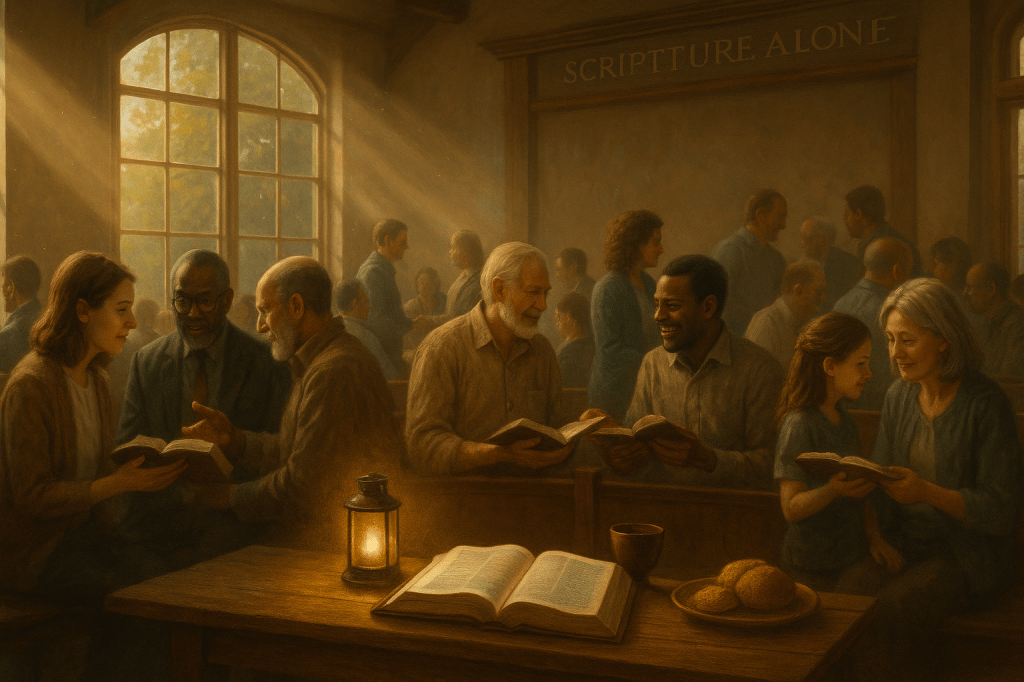
Jesus promised this help for all his disciples: “But the Helper, the Holy Spirit, whom the Father will send in my name, he will teach you all things and bring to your remembrance all that I have said to you” (John 14:26, ESV). If you belong to Christ, the Spirit is your Teacher. You are not left to yourself, and you are not disqualified from speaking God’s truth in love.
With that privilege comes a boundary. We do not teach our hunches or preferences; we teach what God has said. “Trust in the Lord with all your heart, and do not lean on your own understanding. In all your ways acknowledge him, and he will make straight your paths. Be not wise in your own eyes; fear the Lord, and turn away from evil. It will be healing to your flesh and refreshment to your bones” (Proverbs 3:5–8, ESV). Peter presses the same point: “And we have the prophetic word more fully confirmed, to which you will do well to pay attention as to a lamp shining in a dark place… knowing this first of all, that no prophecy of Scripture comes from someone’s own interpretation. For no prophecy was ever produced by the will of man, but men spoke from God as they were carried along by the Holy Spirit” (2 Peter 1:19–21, ESV). The Spirit who inspired the Word never contradicts the Word.
And here is the purpose: we teach one another so that our lives might be an acceptable offering to God, sanctified by the Holy Spirit (Romans 15:16). Mutual instruction is priestly service. It keeps pointing us back to the gospel—Christ crucified, buried, and risen; repentance and faith; walking by the Spirit. If you want to grow in this calling, begin here: know the gospel and know your Bible. Read it daily. Read it with someone. Memorize a verse you can share this week. Ask, “How does this passage lead me to Christ?” Then look for one concrete opportunity to encourage, correct, or comfort a brother or sister with the Word.
As we come to the Lord’s Table, we remember that “as often as you eat this bread and drink the cup, you proclaim the Lord’s death until he comes” (1 Corinthians 11:26, ESV). Church, you are full of goodness, filled with knowledge, and—by the Spirit—able to instruct one another. Let’s walk in that grace together.
 Excel Still More