

Summary of my sermon, based on Philippians 1:27-2:4. Preached at Greenhills Christian Fellowship Toronto on October 12, 2025.
Our text is Philippians 1:27–2:4. Hear Paul’s charge (ESV): “Only let your manner of life be worthy of the gospel of Christ, so that whether I come and see you or am absent, I may hear of you that you are standing firm in one spirit, with one mind striving side by side for the faith of the gospel, and not frightened in anything by your opponents… So if there is any encouragement in Christ, any comfort from love, any participation in the Spirit, any affection and sympathy, complete my joy by being of the same mind, having the same love, being in full accord and of one mind… Do nothing from selfish ambition or conceit, but in humility count others more significant than yourselves. Let each of you look not only to his own interests, but also to the interests of others.”
Unity is fragile. I remember where I was on September 11, 2001—how a moment galvanized nations. Yet the legacy of the “war on terror” is complicated. Mission creep set in: Afghanistan led to Iraq, “freedom fries” replaced French fries in some restaurants, and “mission accomplished” was declared far too soon. Two decades later, Afghanistan returned to Taliban control. That’s what mission creep does—when objectives drift, unity fractures. And this isn’t just geopolitics; it happens to churches. When our mission creeps away from the gospel, unity crumbles.
Paul gives us the basis of gospel unity: “Only let your manner of life be worthy of the gospel of Christ.” The phrase translated “manner of life” reflects a citizenship idea (politeuesthe)—live as citizens. He’s cueing what he’ll say later: “But our citizenship is in heaven” (Phil. 3:20). Read 1:27 like this: “Let your conduct as heavenly citizens be worthy of the gospel.” Why this framing?
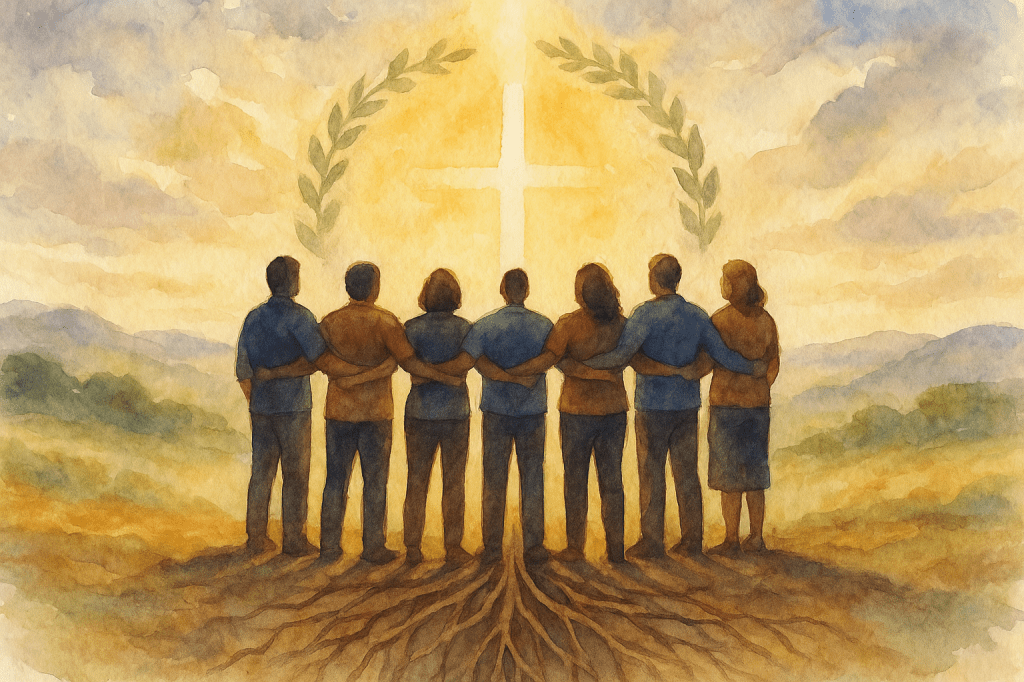
First, citizenship speaks to duty. In earthly civic life we obey laws, pay taxes, serve on juries, vote, stay informed. In the same way, our heavenly citizenship carries responsibilities, not just benefits. Today, citizenship talk often centers on benefits. I’ve seen it up close: many reacquire Philippine citizenship primarily for property rights. Benefits matter, but if that is all citizenship means, something vital is lost. Many Christians think of heavenly citizenship the same way—deliverance from hell, mansions in glory, and for some, invented “benefits” like guaranteed wealth and health. But Scripture calls us to responsibilities too: “Walk in a manner worthy of the calling to which you have been called” (Eph. 4:1). Benefits are real and glorious; duty is real, too.
Second, citizenship warns against dual allegiances. Roman citizenship in Paul’s day was costly and coveted (see Acts 22:27–28), and it could easily eclipse heavenly priorities. Paul redirects the Philippians: live according to the gospel, not the shifting demands of society. We see what happens when churches let society set the agenda. I think of a nearby congregation that once had a self-professed atheist minister and now organizes around values untethered from the gospel. It looks more like a social club—nice people, a knitting circle—but with little affection for Jesus. What’s the point of meeting weekly if not to know, love, and obey Christ? When earthly agendas dominate, gospel unity dissolves.
What happens when we are united in the gospel? Paul says it plainly: “…not frightened in anything by your opponents” (Phil. 1:28). Gospel unity produces courage because it provokes opposition. The very existence of a holy, united church is “a clear sign… of their destruction, but of your salvation, and that from God” (v. 28). That’s hard truth. The gospel divides. As John 3:36 says, “Whoever believes in the Son has eternal life; whoever does not obey the Son shall not see life, but the wrath of God remains on him.” No wonder the world pushes back.
Yet we need not fear. “Fear not, for I am with you” (Isa. 41:10). “God gave us a spirit not of fear but of power and love and self-control” (2 Tim. 1:7). And Paul goes further: suffering for Christ is not an accident; it is a gift. “For it has been granted to you that for the sake of Christ you should not only believe in him but also suffer for his sake” (Phil. 1:29). How can suffering be a gift? Because it brings reward: “Blessed is the man who remains steadfast under trial… he will receive the crown of life” (Jas. 1:12). Because it re-weights our hearts: “This light momentary affliction is preparing for us an eternal weight of glory beyond all comparison” (2 Cor. 4:17). And because it shapes us now: “We rejoice in our sufferings, knowing that suffering produces endurance, and endurance produces character, and character produces hope… because God’s love has been poured into our hearts through the Holy Spirit” (Rom. 5:3–5).
We don’t have to look far to see a world groaning—earthquakes, storms, disease, lonely deaths. I recently watched a story from a Japanese cleaning company that specializes in “kodokushi,” lonely deaths where people go undiscovered for weeks. The owner, also a Buddhist monk, performed rites and told a grieving sister he hoped her brother would enter Nirvana. She replied, “I hope he is able to enter heaven.” That aching uncertainty is everywhere apart from Christ. The world is full of suffering; we need the living hope of the gospel, and we need each other—united—to endure and witness.
How then do we maintain gospel unity? Paul repeats himself for emphasis: “Complete my joy by being of the same mind, having the same love, being in full accord and of one mind” (Phil. 2:2). He knows division can destroy a church. He pleads elsewhere, “that there be no divisions among you… for it has been reported to me… that there is quarreling among you” (1 Cor. 1:10–11). Unity is not optional; it is essential to faithfulness and mission.
And he tells us how, with simple, searching commands: “Do nothing from selfish ambition or conceit, but in humility count others more significant than yourselves. Let each of you look not only to his own interests, but also to the interests of others” (Phil. 2:3–4). That’s the way. Lay down selfish ambition. Refuse conceit. Cultivate humility. Consider others as more significant. Look to their interests. If each of us looks out for the others, all needs are met and unity is preserved.
It also happens to be Thanksgiving. Gratitude steadies unity. “Therefore let us be grateful for receiving a kingdom that cannot be shaken, and thus let us offer to God acceptable worship with reverence and awe” (Heb. 12:28–29). We have received an unshakable kingdom. So, let’s live as heavenly citizens worthy of the gospel, stand firm in one Spirit, strive side by side, refuse fear, embrace the gift of suffering, and, in humility, look to the interests of one another—with reverence, awe, and thanksgiving.
 Excel Still More